
ACP, Polycarbonate or Metal Deck: Choosing an Awning in Ipoh
Compare ACP, polycarbonate, metal deck and PU foam awnings for Ipoh's heat and rain — with design ideas, price factors and how to choose the right one.
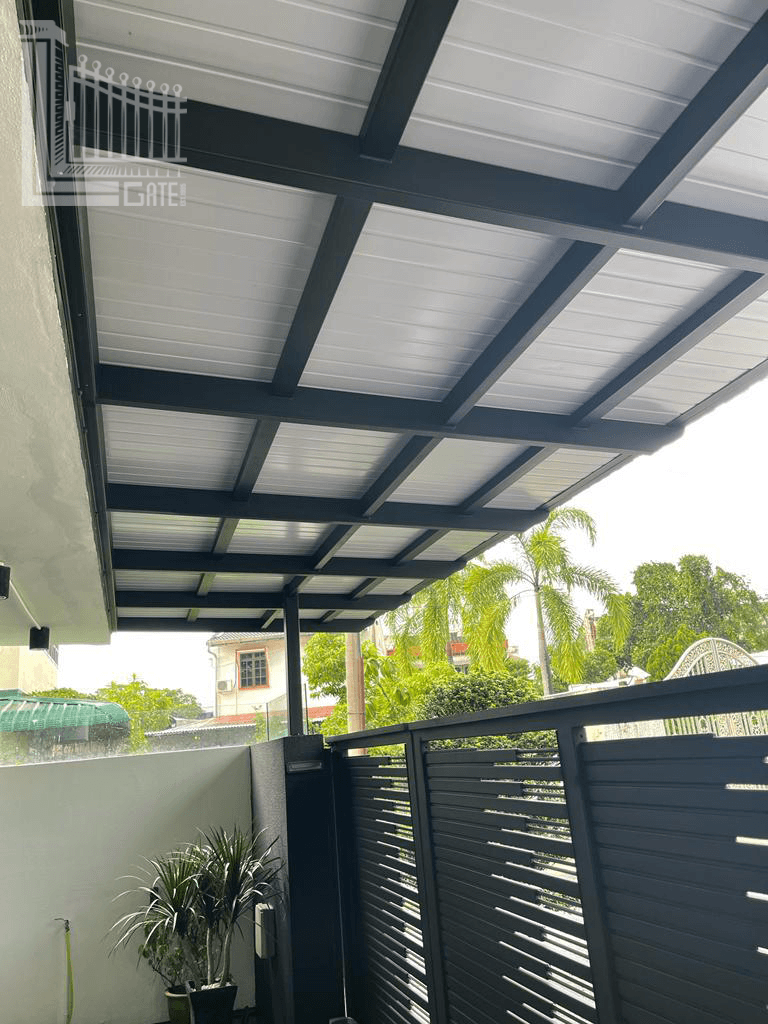
An awning is one of the most practical additions you can make to a Malaysian home. It shades your car porch from the fierce afternoon sun, keeps driving rain off your doorway and windows, and creates a cool, dry space you can actually use. In Ipoh's climate — hot and humid most of the year, then drenched by monsoon downpours — a good awning quickly pays for itself in comfort.
The catch is that not all awnings are equal, and the biggest decision you will make is the roofing material. ACP, polycarbonate, metal deck and PU foam panels each handle heat, rain and glare differently, look different, and cost different amounts. Choose well and you get years of cool, quiet, leak-free shade; choose poorly and you get a hot, noisy, or short-lived roof.
This guide compares the main awning materials for Malaysian homes, explains which suits our heat and heavy rain, covers retractable options, walks through the design and price factors, and shows how to get an awning made to fit your home. If you want the broader picture on metal awnings first, our metal awning guide is a good companion read.
Why Your Awning Material Matters in Ipoh's Climate
Two things define the weather an awning must survive here: relentless heat and heavy rain. The sun beats down for most of the year, so a roof that soaks up heat will turn the space beneath it into an oven. Then the monsoon arrives, and the same roof has to shed sheets of water without leaking — and do it quietly, because a thin roof under tropical rain can sound like a drum.
That is why the material choice is not just about looks. A good awning material should reflect or resist heat, seal reliably against driving rain, cope with constant humidity without rusting or clouding, and stand up to years of UV without going brittle. Some materials excel at one of these and struggle with another, which is exactly why it pays to understand the trade-offs before you commit.
The frame matters too. Whatever the roofing, it is carried on a steel or aluminium frame that must be strong enough for our storms and properly treated against rust. A quality awning is really the pairing of the right roof sheet with a well-built, well-finished frame — get either wrong and the whole thing disappoints.
ACP Awnings (Aluminium Composite Panel)
ACP — aluminium composite panel — is a flat sheet made of a plastic core sandwiched between two thin layers of aluminium. It has become one of the most popular awning materials in Malaysia because it looks clean and modern, comes in a wide range of colours and finishes, and gives a smooth, flat, architectural surface that suits contemporary homes and shopfronts alike.
Its strengths are appearance and versatility. ACP can be shaped into crisp, boxy modern designs that a corrugated sheet simply cannot match, and the aluminium face resists rust and holds its colour well. For homeowners who want the awning to be a design feature — a smart, flat canopy over the porch or entrance — ACP is often the first choice.
The points to weigh are that ACP is a solid panel, so it blocks light completely (great for shade, but it will make the space beneath darker), and quality varies a lot between grades. Good fire-rated, weather-grade ACP performs well for years; cheap panels can fade or delaminate. This is a material where it genuinely pays to use the right grade and a fabricator who installs it properly so water is shed cleanly.
Polycarbonate Awnings
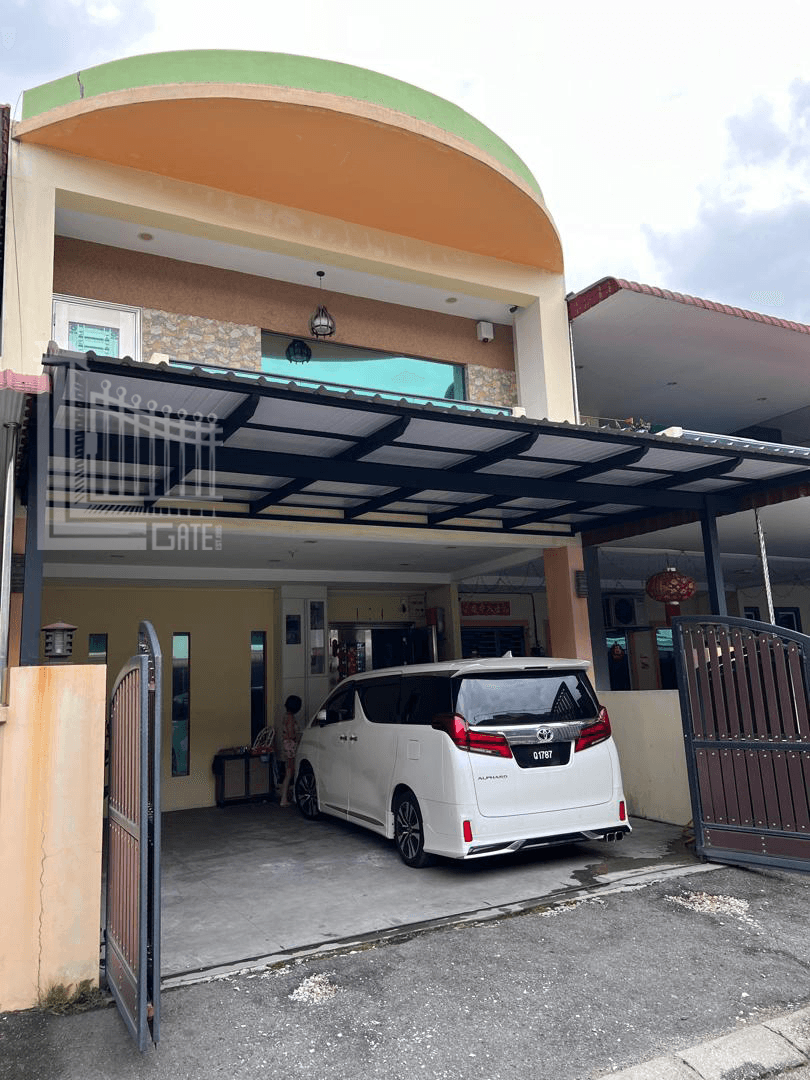
Polycarbonate is a tough, translucent plastic sheet — the same family of material used in safety glazing. As an awning roof it is prized for one thing above all: it lets daylight through while blocking direct sun and rain. That makes it ideal where you want a bright, sheltered space rather than a dark one — over a kitchen yard, a side passage, a drying area or a porch where you still want natural light.
Modern polycarbonate sheets carry a UV-protective layer and come in tints that cut glare and heat while staying translucent. It is lightweight, curves easily for elegant arched awnings, and shrugs off rain and impact far better than the old brittle fibreglass sheets it replaced. For many homes it strikes a nice balance between shelter and openness.
The trade-offs to keep in mind: because it transmits light, it also transmits some heat, so a polycarbonate porch will be brighter but not as cool as one under a solid insulated roof. Rain can also be a little louder on it than on an insulated panel. Choosing a good-quality tinted sheet and a proper slope for drainage addresses most of these concerns.
Metal Deck Awnings
Metal deck refers to profiled (ribbed) metal roofing sheets — the same durable material used on many roofs and factories, scaled down for awnings. It is the workhorse of Malaysian awnings: strong, long-lasting, fully waterproof, and economical for covering larger areas like a full car porch or a rear extension.
Its great strength is durability and value. A properly coated metal deck sheet resists our sun and rain for many years, spans wide areas without much support, and is one of the most cost-effective ways to roof a big space. It is completely opaque, so it gives full, dark shade — welcome over a car that would otherwise bake in the sun.
The two things to manage are heat and noise. Bare metal gets hot and rain drums on it, but both are easily solved: pairing metal deck with a PU foam layer underneath (see below) transforms it, cutting the heat radiating down and muffling the rain. For a large, hard-working, budget-conscious awning, insulated metal deck is hard to beat.
PU Foam Panels and Retractable Awnings
PU foam awnings use a sandwich panel: a layer of rigid polyurethane foam bonded between metal sheets, or a foam layer added beneath a metal deck roof. That foam core is the key — it insulates against heat and deadens the sound of rain, so the space below stays noticeably cooler and quieter than under bare metal. This is why 'PU metal awning' has become such a sought-after upgrade: it delivers the durability of metal with far better comfort.
If you want a solid, insulated, waterproof roof that keeps the porch cool and the house quiet during a downpour, a PU foam or insulated metal panel is usually the most comfortable choice. It costs more than plain metal deck, but for a space you use every day the comfort difference is significant.
Retractable awnings are a different concept altogether: a fabric canopy on an arm mechanism that extends for shade and rolls away when you do not need it. They are excellent for patios, cafe frontages and balconies where you want flexible shade and an unobstructed sky at other times. They are less suited to permanently sheltering a car or a doorway from heavy monsoon rain, where a fixed roof serves better — so the right pick depends entirely on how you will use the space.
Comparing the Materials: Which Should You Choose?
There is no single 'best' awning material — only the best one for a particular spot. A quick way to decide is to start from what you want the space to feel like and work back to the material:
- Want a bright, sheltered space that still gets daylight? Polycarbonate.
- Want a clean, flat, modern architectural look? ACP.
- Covering a large area on a budget, full shade is fine? Metal deck.
- Want it cool and quiet under heavy rain? PU foam / insulated metal panel.
- Want flexible shade you can roll away? Retractable fabric awning.
Awning Price Factors in Malaysia
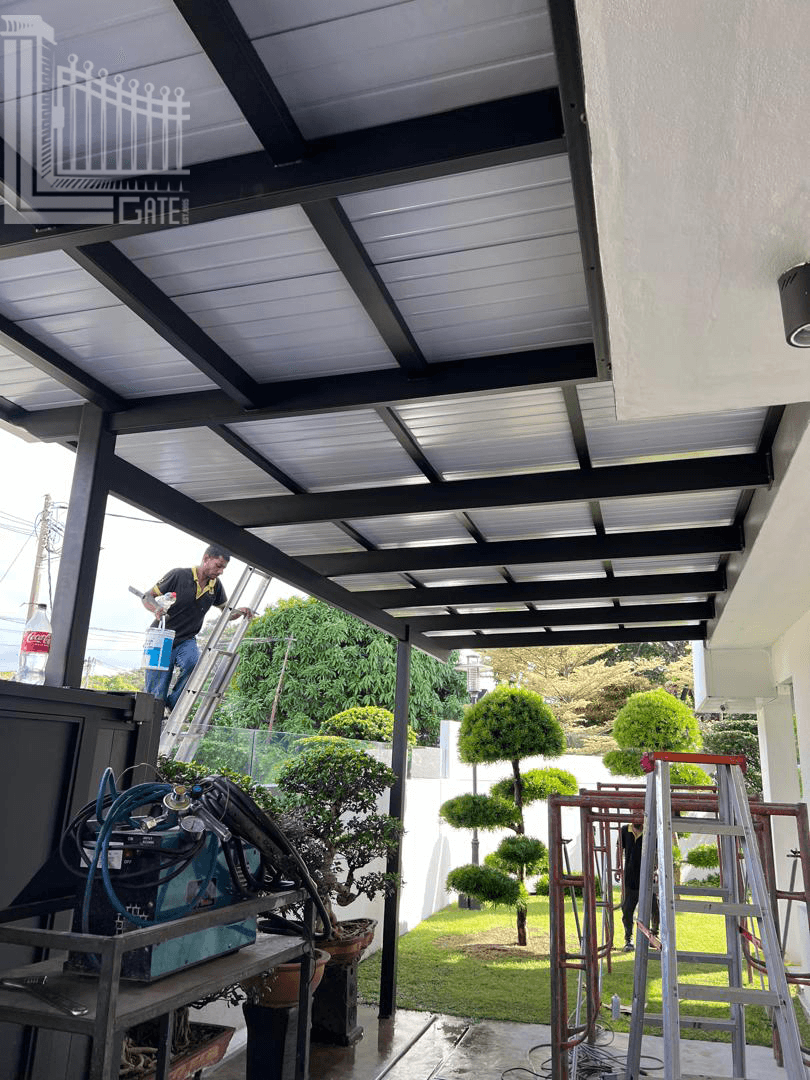
As with most fabricated work, there is no fixed 'awning price' — it depends on the choices below rather than a single rate. Understanding what moves the cost lets you balance comfort, looks and budget for your own home instead of comparing quotes blindly:
- Roofing material — polycarbonate, ACP, metal deck and PU foam sit at different price points, with insulated panels costing more than plain sheet.
- Size and span — a larger area needs more material and a stronger frame.
- Frame material and finish — mild steel is economical; aluminium and powder-coated finishes cost more but need less upkeep.
- Design complexity — flat, arched, multi-level or curved awnings involve more fabrication than a simple lean-to.
- Height and access — high or awkward installations take more labour to build safely.
- Extras — gutters, downpipes, lighting and side panels add to the total.
Design Ideas and Getting Your Awning Made in Ipoh
Beyond the roofing, the shape of an awning shapes the look of your home. Flat ACP canopies suit modern, minimalist houses; gently arched polycarbonate awnings soften a facade and feel airy; and a clean-lined insulated metal awning over the car porch is a practical, handsome standard for terrace and semi-D homes. Coordinating the awning's colour and lines with your gate, grille doors and fence makes the whole exterior feel intentional.
At Wai Keong Iron Work, we design, fabricate and install custom awnings — in ACP, polycarbonate, metal deck and insulated PU panel — for homes and shoplots across Ipoh, Menglembu and Perak. We will look at your space, recommend the material that fits how you will use it, and build an awning on a properly treated frame that keeps you cool and dry for years. Contact us for a free consultation and quotation.
Get a Free Awning Consultation in Ipoh
Tell us about the space you want to shade and we'll recommend the right awning material and design for your home.