
Aluminium vs Mild Steel Folding Gate: Which Is Better for Malaysian Homes?
Aluminium or mild steel folding gate for your Malaysian home? Compare rust, weight, strength, design and auto gate fit — from an Ipoh folding gate maker.
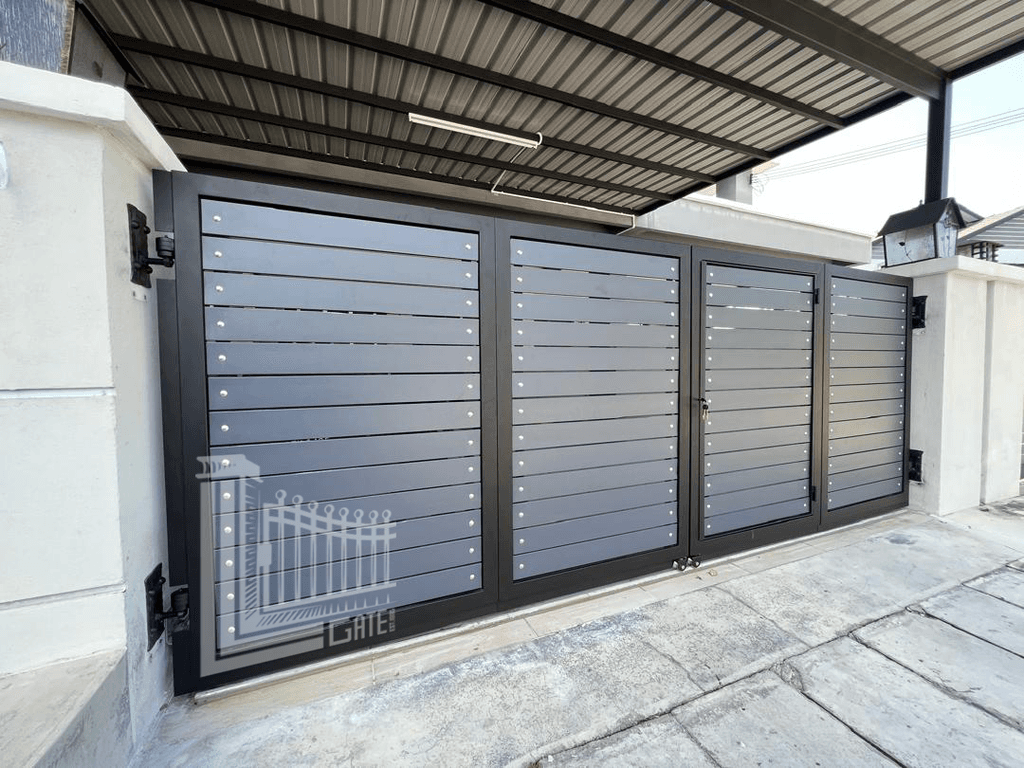
Walk down almost any street in Ipoh, Menglembu or the newer housing areas around Perak and you will see two kinds of folding gate doing exactly the same job in two very different ways. One is built from mild steel — the traditional choice that has been guarding Malaysian homes for generations. The other is aluminium, the lighter, rust-free material that now takes a large share of new folding gate installations.
Both make good gates. Neither is the wrong answer. But they behave differently once you live with them day to day — in how heavy the leaf feels on your hand, how they cope with our humidity and monsoon downpours, how they age, what designs they allow, and how kindly they treat an auto gate motor. Picking the material that does not suit your house is not a disaster, but it is an expensive thing to change your mind about three years later.
This guide compares aluminium and mild steel folding gates the way a fabricator sees them: weight, corrosion, strength and security, appearance and finishes, maintenance, longevity, and suitability for automation. By the end you should be able to say with confidence which material fits your house, your driveway and the way your family actually uses the gate.
What Mild Steel and Aluminium Actually Are
Mild steel is the everyday structural steel that most iron gates in Malaysia are made from — iron with a low carbon content. It is strong, easy to weld, and easy to shape into flat bars, hollow sections and decorative scrollwork. It is the material behind the classic pagar besi look: solid welded frames, clean joints, and the freedom to build almost any pattern a customer sketches on a piece of paper.
Aluminium is a completely different metal. For the same volume it weighs roughly a third of what steel does, and instead of rusting it forms a thin, stable oxide layer on its own surface that shields the metal underneath. Aluminium gates are usually built from extruded profiles — hollow slats, posts and frame sections pushed into shape at a mill — which are then cut, assembled and finished into a gate.
That single difference in how the two metals are made explains almost everything that follows. Steel is welded into one rigid structure and gets nearly all of its weather protection from the coating you put on it. Aluminium is more often assembled from profiles with mechanical fixings, and carries most of its protection inside the metal itself. Understanding this makes the rest of the comparison much easier to follow.
Weight: The Difference You Feel Every Single Day
A folding gate is not a static object. It swings, folds and stacks against the pillar several times a day, every day, for years. Weight decides how that feels. A mild steel folding gate is meaningfully heavier than an aluminium gate of the same size and design, and every kilogram of that weight is carried by the hinges, the rollers or top track, and the pillars.
For a manual gate, the difference shows up on the very first push. A heavier steel leaf takes more effort to start moving and more effort to stop, which matters a great deal in a household with elderly parents or where a child is sometimes the one opening up. A lighter aluminium leaf folds with a fingertip. Over years of daily use, that is not a small quality-of-life detail.
Weight is also a structural question for the fabricator. A heavy steel folding gate needs stronger hinges, more substantial pillars and a beefier top structure — especially in a trackless design where the whole gate hangs from above instead of resting on the driveway. Aluminium's lightness buys design freedom: wider leaves, taller panels, and less strain on everything that holds the gate up.
Rust and Corrosion in Ipoh's Humid, Rainy Climate
Perak's climate is about as demanding as it gets for exterior metalwork. Near-constant humidity, long hot afternoons, and then monsoon rain that leaves a gate soaking wet for hours at a time. Add splashing from the road, sand and grit collecting at the base, and detergent residue from washing the car, and the bottom of a gate lives a hard life.
Mild steel will rust wherever moisture reaches bare metal. That is not a defect, it is chemistry, and it is exactly why a steel gate is built up in layers: proper surface preparation, a primer, then a finishing coat or powder coating. Applied well onto clean metal, that system holds up for years. But every deep scratch, chipped edge, drilled hole and knock from a car bumper is a doorway where water can start working, and that is where the orange bleed marks appear first.
Aluminium does not rust. It can corrode under specific conditions — white pitting in constant salt exposure, or galvanic corrosion where a dissimilar metal is left in direct contact with it — but for an inland town like Ipoh, an aluminium folding gate simply never develops the rust streaks that a neglected steel gate does. The bottom rail and the lowest slats, which are the wettest part of any gate, are where the difference becomes visible first.
- The bottom rail and lowest slats, splashed by rain and standing water.
- Hinge points and moving joints, where the coating slowly wears through.
- Welds and drilled holes, if they were not fully sealed and coated.
- Scratches from bicycles, bumpers and dragged objects.
- Anywhere two different metals sit in direct contact with each other.
Strength and Security: Where Mild Steel Still Leads
Steel is the stronger metal, and there is no getting around it. Section for section, mild steel resists bending, prying and impact better than aluminium. For a homeowner whose first concern is security, that solidity is reassuring — a steel gate feels immovable, and a steel frame can absorb a knock from a reversing car far better than a light profile can.
That does not make aluminium weak. Gate manufacturers compensate with thicker profile walls, larger sections and internal reinforcement, and a properly specified aluminium folding gate is nowhere near flimsy. The mistake is comparing a thin, budget aluminium slat with a solid steel one and concluding the material is the problem — in most cases it is the specification, not the metal.
It is also worth remembering that security is a property of the whole gate, not of one material. The lock, the hinges, how deeply the pillars are anchored, the height of the gate and the size of the gaps between slats all matter as much as what the leaf is made of. A steel gate with a weak lock is not safer than a well-engineered aluminium gate with a solid one. Judge the complete system.
Looks, Finishes and Folding Gate Design Freedom
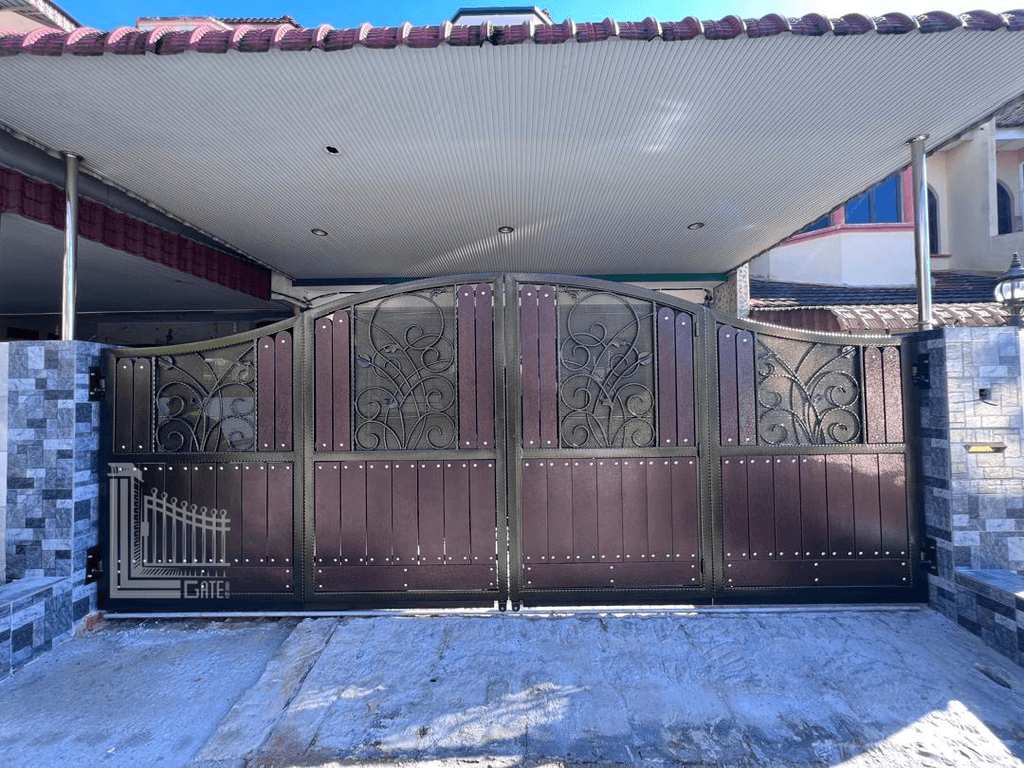
This is where personal taste takes over from engineering. Mild steel is the material of choice when you want something crafted and ornamental — welded scrollwork, wrought-iron style flourishes, laser-cut panels, mixed textures, and one-off patterns designed around your house. Because steel is welded, a fabricator can build essentially any shape, which is why the most detailed folding gate designs in Malaysia are still made from it.
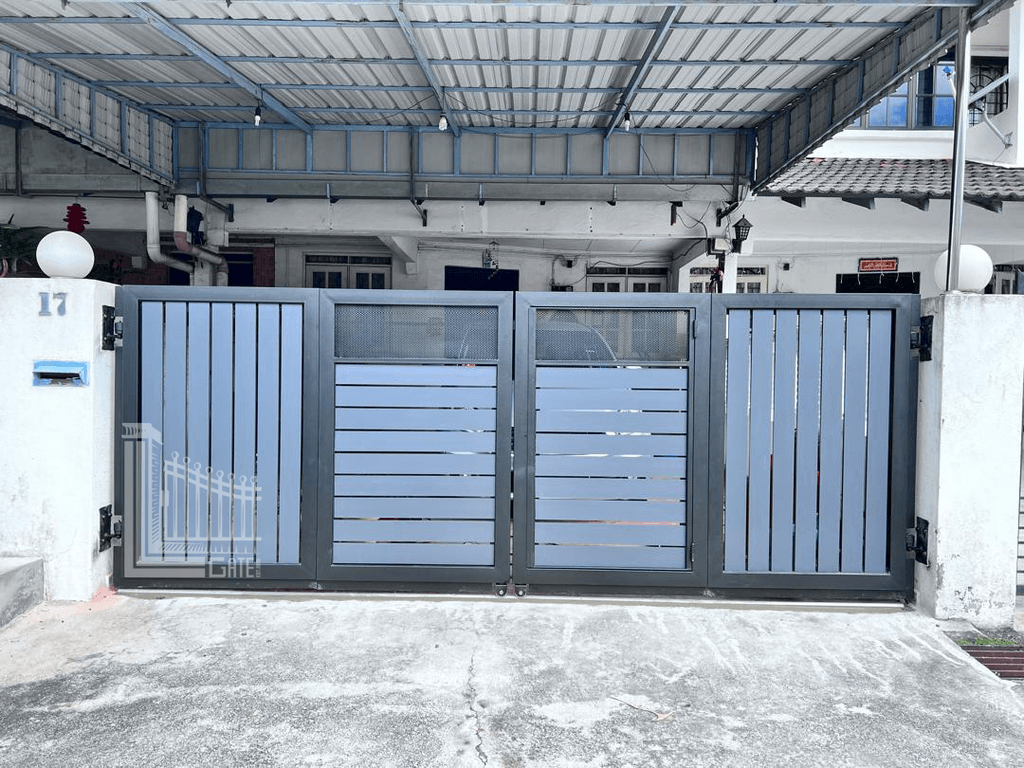
Aluminium tends towards a cleaner, more contemporary language: horizontal or vertical slats, generous flat panels, crisp shadow lines, and the timber-look finishes that suit modern terrace and semi-detached facades. If the look you are after is minimal and architectural, aluminium delivers it very naturally, and it keeps looking sharp because there is no rust clock running in the background.
Both materials accept powder coating in a wide range of colours, so colour is rarely the deciding factor. What differs is the character of the result — steel reads as solid, crafted and traditional even in modern designs, while aluminium reads as light, precise and modern. Look honestly at your house's front elevation and pick the one that belongs there.
- Choose mild steel for ornamental scrollwork, custom welded patterns and a traditional, substantial look.
- Choose aluminium for clean slat designs, wood-grain finishes and a light, modern facade.
- Consider slat spacing: closer spacing gives privacy, wider spacing gives airflow and visibility.
- Match the gate's colour and lines to your grille, awning and main door for a coherent frontage.
- Ask to see finished projects in both materials before you decide — photos on a screen flatten the difference.
Folding Gate Maintenance and Longevity: The Real Cost Over Time
A mild steel gate asks for a routine. Rinse off road dust and rain residue, keep the base clear of soil and standing water, inspect the coating a couple of times a year, and touch up chips and scratches as soon as you spot them — a small dab of paint today prevents a spreading rust patch next year. Eventually a steel gate benefits from a proper repaint, and how long that day takes to arrive depends almost entirely on how well the original preparation and coating were done.
An aluminium gate is far less demanding. Wash it down with mild soap and water, keep the hinges and moving parts clean and lubricated, and that is close to the whole list. There is no repainting cycle driven by rust. Over many years of strong tropical sun a powder-coated finish can slowly chalk or fade, but that is a cosmetic change on a structurally sound gate, not the beginning of decay.
Longevity is not as simple as declaring one material the winner. A well-coated, well-maintained steel gate can serve a house for decades, and it holds one advantage that is often forgotten: it is easy to repair locally. A fabricator can cut out a damaged section, weld in new steel and refinish it until the repair disappears. Aluminium sidesteps the rust problem entirely, but a deeply dented or cracked profile is usually replaced rather than mended.
Which Material Suits an Auto Gate or Trackless Motor Better?
If you are automating the gate — and many new folding gates in Ipoh are — weight moves straight to the top of the list. An auto gate motor spends its whole life starting, moving and stopping a mass. The lighter that mass, the gentler each cycle is, the smoother the start and stop feel, and the less wear accumulates in the drive and the hinges. This is the single strongest practical argument for aluminium.
Weight matters even more on a trackless folding gate, because there is no ground track sharing the load — the top structure and the pillars hold the entire gate. A lighter aluminium leaf places less continuous stress on that structure, keeps the panels aligned for longer, and lets the motor work comfortably inside its range instead of at the edge of it.
None of this means steel cannot be automated. It absolutely can, and plenty of automated steel gates run happily for years. It simply has to be done properly: a motor correctly sized for the real gate weight, hinges and pillars built for the load, and a structure that will not sag over time. There is one more everyday detail worth knowing — during a power cut you fall back to the backup battery or the manual release, and a lighter gate is noticeably easier to move by hand in the dark and the rain.
How to Decide: A Short, Honest Checklist
Run through the questions below and one material will usually pull ahead for your particular house. If the answers come out split, give more weight to the points tied to how you will actually use the gate — automation and daily handling — than to the ones about first impressions.
And if you are still undecided, that is completely normal. It is exactly the kind of question a local fabricator should answer on site rather than over a price list. Someone who has installed both materials across Ipoh, Menglembu and the surrounding Perak neighbourhoods can look at your driveway width, your pillars, how exposed the gate is to rain, and your plans for automation, then give you a straight recommendation.
- Will the gate be automated now or later? Lighter aluminium is easier on the motor.
- Is the gate trackless, hanging from a top structure? Then weight matters more than usual.
- How exposed is the base to rain, splashing and standing water?
- Who opens it most often, and would a heavy manual leaf be a problem for them?
- Do you want ornamental welded detail, or clean modern slats?
- Are you willing to inspect and touch up a coating regularly, or do you want minimal upkeep?
- Is impact resistance a concern — a tight driveway, or a gate that gets knocked often?
Not Sure Which Material Suits Your Gate?
Wai Keong Iron Work fabricates both aluminium and mild steel folding gates for homes across Ipoh, Menglembu and Perak. Tell us about your driveway and we will recommend the right material honestly.